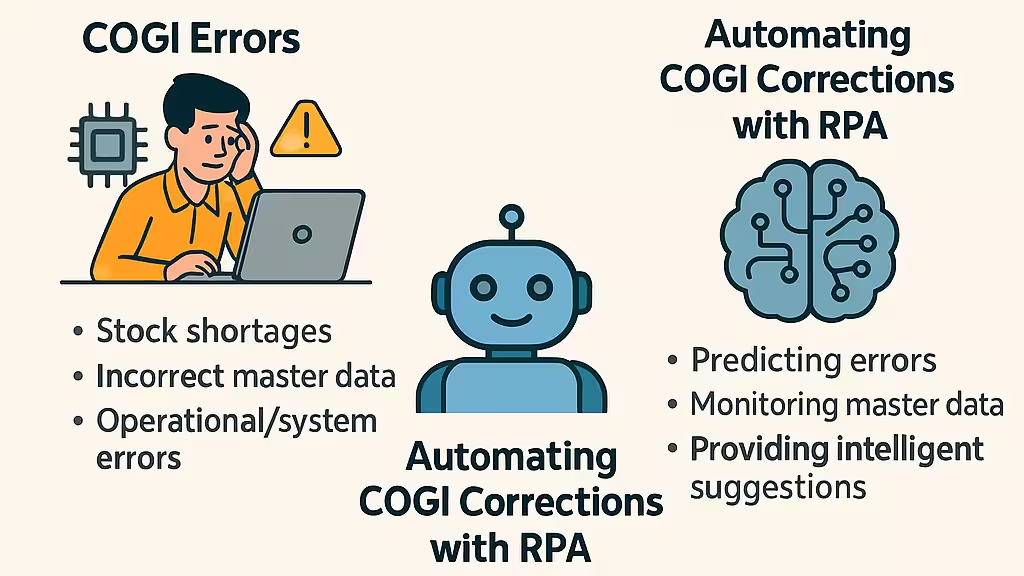
COGI (Component Goods Issue) flags errors in SAP when automatic material consumption postings fail during production order confirmation. While it prevents immediate line stoppages, unmanaged COGI errors severely hinder efficiency, particularly in high-volume electronics manufacturing.
What is COGI and Why Do Errors Occur?
COGI lists failed goods issue transactions. Common causes include:
Stock Shortages
Insufficient component stock in the specified SAP location when needed (often during backflushing).
Incorrect Master Data
Errors in Bills of Materials (BoMs), material setup, or storage location assignments.
Operational/System Errors
Duplicate confirmations, unit of measure issues, invalid batch numbers, or system glitches.
The Impact of COGI Errors
Financial Issues
Inaccurate inventory levels and production costs, delaying month-end closing.
Operational Drain
Significant manual effort for key users to investigate and correct errors, diverting them from value-added tasks.
Two-Pronged Solution: Correct and Prevent
RPA handles the present by automating corrections. AI secures the future by preventing errors before they happen.
RPA — Automated Correction
Robotic Process Automation uses software bots to mimic human actions in SAP. Bots can automatically:
Run the COGI transaction regularly
Scheduled bot executions ensure COGI errors are caught and addressed promptly without manual intervention.
Reprocess errors automatically
Especially those due to temporary stock shortages that have since been resolved.
Notify humans about complex errors
Flag errors that require investigation and manual intervention, ensuring nothing falls through the cracks.
RPA drastically cuts manual workload, improves accuracy, and frees up personnel for strategic tasks.
AI — Proactive Prevention
Artificial Intelligence focuses on preventing COGI errors before they occur:
Predicting Errors
Analyzing historical data to identify high-risk orders or components, enabling preemptive action.
Monitoring Master Data
Continuously checking data consistency and completeness, flagging anomalies before they cause issues.
Providing Intelligent Suggestions
Assisting with BoM accuracy by suggesting historically missed components.
AI shifts COGI management from reactive fixing to proactive prevention.
Recommendations for Managers and Key Users
Ensure Master Data Accuracy
Maintain correct and complete BoMs and material master data.
Monitor Proactively
Track COGI KPIs, assign ownership, and ensure timely resolution.
Leverage RPA
Automate repetitive COGI clearing tasks, starting with high-impact areas.
Explore AI
Gradually adopt AI for predictive insights and data quality checks.
Collaborate
Foster communication between Production, IT, Master Data, and other relevant teams to address root causes.
Conclusion
COGI errors are manageable. Combining data discipline with RPA for automated correction and AI for proactive prevention transforms COGI management. This leads to fewer disruptions, accurate data, reduced manual effort, and allows teams to focus on optimization and innovation.

