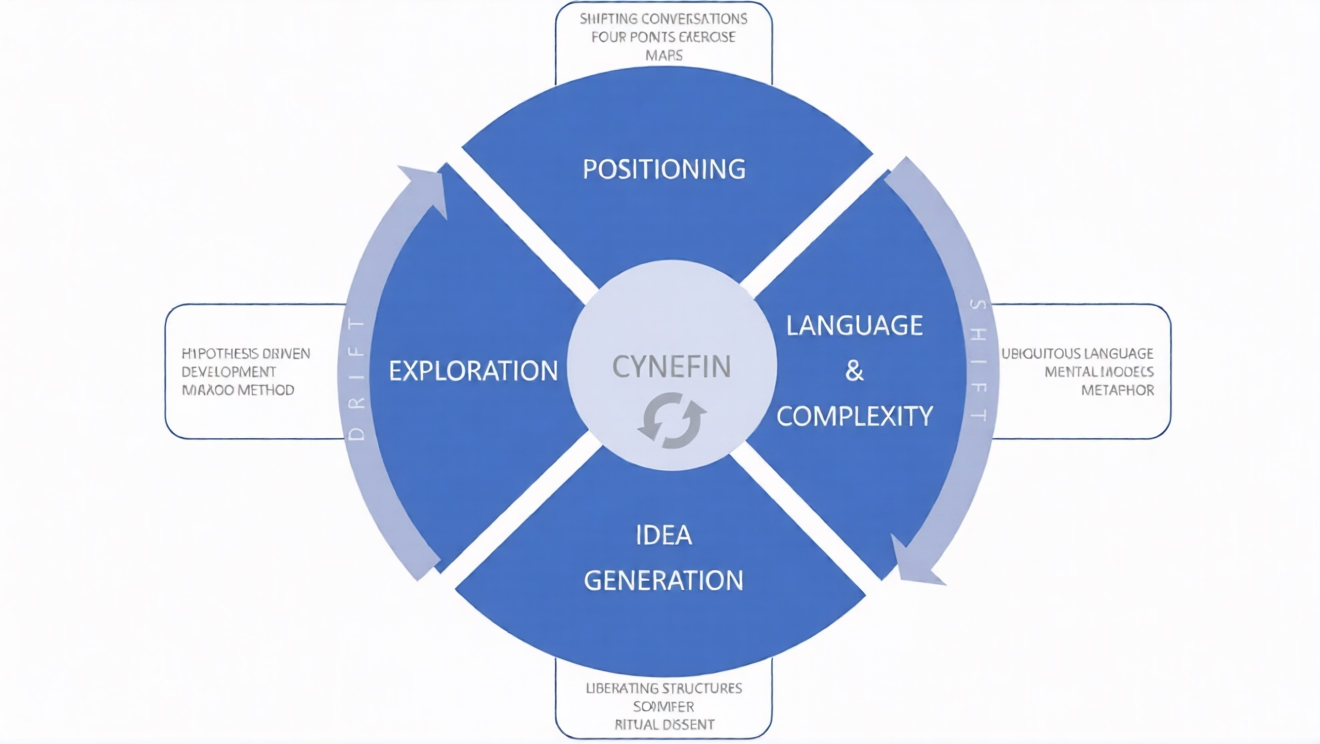
Cynefin tells you where you are, not what to do. It’s an orientation framework that helps you choose the right method based on the complexity of the situation.
The 5 Cynefin Domains
Cynefin divides situations into 5 distinct domains, each with its own approach:
Obvious (Clear)
Clear rules, standard procedures. Apply best practices without hesitation.
Complicated
Experts are needed. Analyze, evaluate, then act.
Complex
Try and see what happens. Experiment, measure, adapt.
Chaotic
Act immediately. There’s no time for analysis, establish order first.
Confusion
You don’t know where you are. First step: identify which domain you’re in.
Cynefin Assessment: Strengths and Weaknesses
How does Cynefin score on stability, innovation, and resilience?
Stability
Moderate
Prevents unstable decisions through correct situation classification.
Innovation
Very strong in complex zones
Forces experimentation and letting go of illusory control.
Resistance
High
Pure adaptability – relies not on a single method, but on context.
Where Cynefin Gives In
Subjective Classification
Mislabeling the domain = disaster. If you treat a complex problem as a clear one, you apply the wrong solutions.
No Concrete Tools
It gives you the map, not the path. You know where you are, but not which tool to use.
Hard for Inexperienced Teams
Abstract terms can create confusion in teams that haven’t worked with decision frameworks.
When to Use Cynefin
Use when
Crises, Uncertainty, Systemic Innovation
It’s a compass in chaos. It helps you understand whether you need to act, analyze, or experiment.
Methodology Filter
Before choosing Agile, Lean, or TRIZ, ask yourself: “Where am I?” Cynefin helps you answer.
Avoid when
Not an Execution Method
Cynefin guides choices, it doesn’t produce results directly. It must be combined with other tools.
Conclusion
Cynefin doesn’t solve problems. It maps them. It’s a mental orientation system in a world where you don’t know if you need TRIZ or an instant decision.