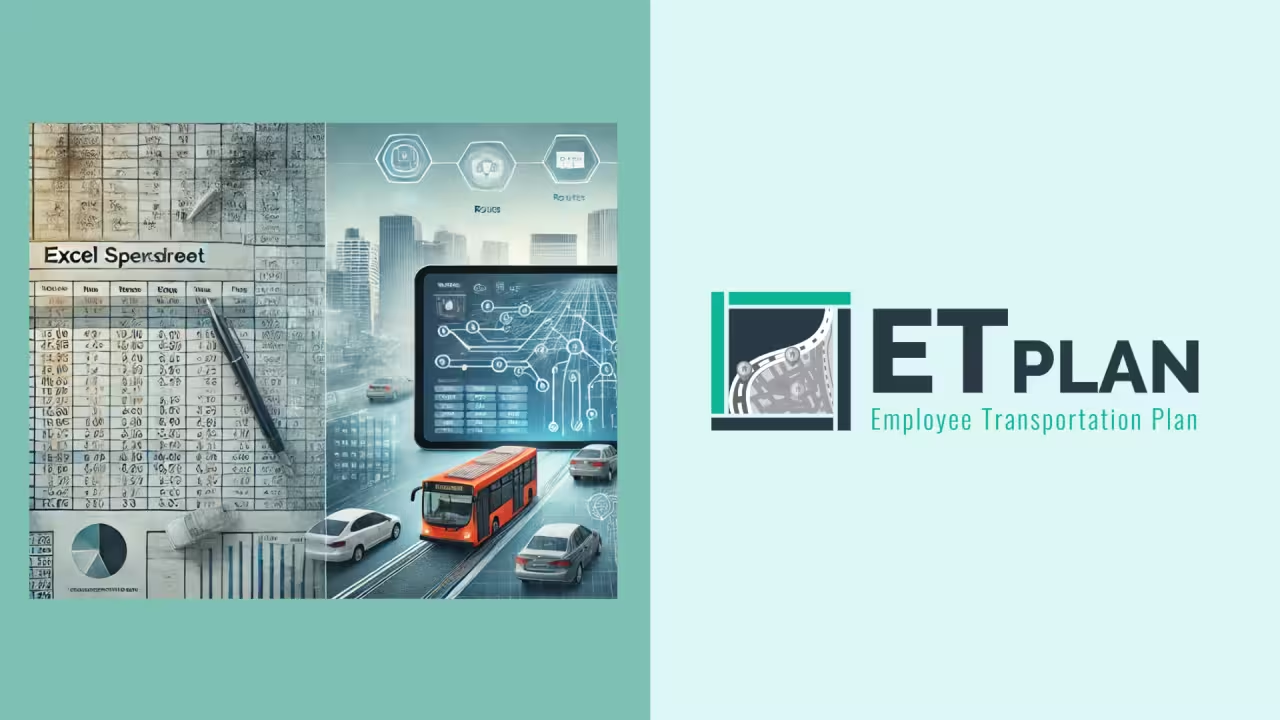
Companies typically outsource their bus fleet and pay between €1.5 and €3/day/employee for daily transport. For 1,000 employees and 20 working days, that means €30,000–€60,000/month just on commuting costs.
€30,000–€60,000/month
Typical commuting cost for 1,000 employees
Context and challenges
Manual planning generates:
Allocation errors and route overlaps
Manual planning leads to overlaps and incorrect employee-to-route assignments, causing confusion and delays.
Cost increase of up to 20%
Route planning inefficiencies can increase transport costs by up to 20% due to extra kilometers traveled.
Monitoring and reporting difficulties
The lack of real-time data makes efficient monitoring and accurate transport activity reporting impossible.
The value of ETplan
Dynamic route optimization
Algorithms analyzing traffic, time windows, and real distances reduce costs by 10–27%.
Fleet and overtime reduction
One client went from 42 to 23 vehicles, cutting overtime transport expenses by 45%.
Automation and integration
Direct invoicing from the platform, real-time reports, and legal compliance eliminate repetitive tasks and data discrepancies.
Key benefits
Analyze ETplan through the lens of concrete benefits:
27%
Transport cost reduction
Through route and fleet optimization.
15%
Commute time reduction
Shorter, smarter routes for employees.
50%+
Planning efficiency
Less time on planning and provider communication.
CO₂
Emissions reduction
Shorter routes and a reduced fleet lower the carbon footprint.
By reducing costs, saving time, and streamlining processes, ETplan generates significant savings that lead to a rapid return on investment.
Conclusion
ETplan is not just an operational tool, but a strategic optimization solution. The true value emerges when we consider the cumulative impact on costs, efficiency, and sustainability. The higher the daily travel volume, the more visible the savings, process simplification, and long-term advantages become.