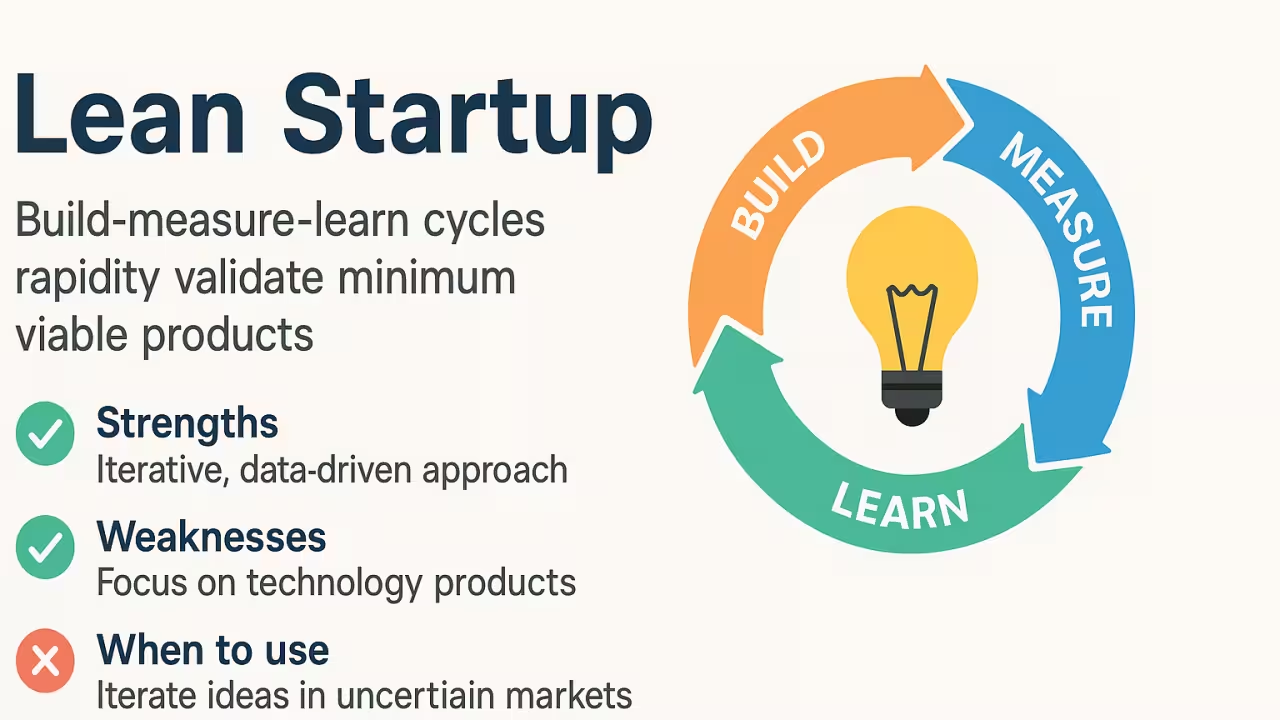
The Lean Startup method, created by Eric Ries, revolutionized how tech products are launched. You no longer spend 2 years building something perfect. You build an MVP, test it, learn from the market, then adjust. It's agile, fast, and seemingly infallible. But does it work just as well when the product isn't digital? Or when the context is chaotic, regulated, or rooted in heavy infrastructure?
Lean Startup Assessment: Strengths and Weaknesses
How does Lean Startup score on stability, innovation, and resilience?
Stability
Good in early phases
The MVP–feedback–pivot system ensures rapid adaptation. But long-term stability isn’t the main focus.
Innovation
High
It involves rapid testing of radical ideas. It encourages breaking the status quo, if the data validates.
Resistance
Limited
Lean Startup relies on learning from the current context. If that context changes radically (regulations, culture, industry), what you’ve learned may become irrelevant.
Where Lean Startup Gives In
Fixation on vanity metrics
It's easy to fall in love with growth and miss the real value.
Local maxima
The MVP can optimize the wrong thing if the problem isn't correctly formulated.
Tech-heavy bias
It works well for apps and digital services. Harder in industries with long cycles or where real feedback comes after months (e.g., pharma, automotive, public education).
When to Use Lean Startup
Use when
Tech products, SaaS, mobile apps
If you have quick access to users and can iterate often, it's ideal.
When the problem is unclear
You want to test hypotheses with low risk. MVP + feedback = rapid learning with controlled cost.
Avoid when
Doesn't work when implementation is expensive
When feedback comes slowly. An MVP for a hospital or a robotic production line isn't exactly minimum.
Conclusion
Lean Startup is the sprint. It helps you avoid spending years building the wrong thing. But it doesn't guarantee you're running in the right direction or that the product will survive a real storm.