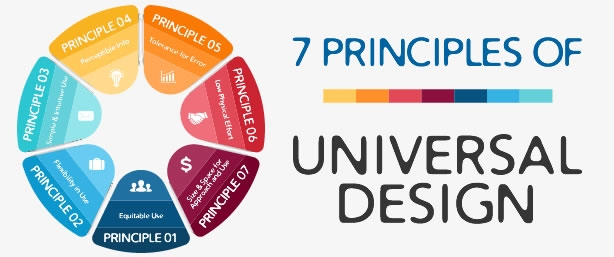
Universal Design Principles (UDP) are not an innovation method, but a set of 7 design rules meant to create products, services, and spaces usable by as many types of people as possible, regardless of abilities, age, culture, or context. Their applications go beyond physical design (furniture, buildings) and reach into UX, public services, transport, software, education – anywhere inclusion matters.
UDP Assessment: Strengths and Weaknesses
How does Universal Design score on stability, innovation, and resilience?
Stability
Good
Universally designed products tend to work well across a wide variety of contexts – even ones they weren’t originally designed for.
Innovation
Variable
Universal design isn’t necessarily innovative, but it forces teams to rethink solutions from the start to include as many people as possible.
Resistance
High
If you design for a wide spectrum of users and scenarios, your solution has a better chance of surviving in unexpected contexts.
Where UDP Fails
Dilutes Optimization
Something that needs to work for everyone... risks not being perfect for anyone.
Testing Is Expensive
You need diverse groups, multiple validations, and testing in different real-world contexts.
No Quantifiable Thresholds
It doesn’t tell you “you’ve arrived,” only that “more needs to be included.” Without a clear indicator, decisions can become subjective.
When Is Universal Design Worth Using?
Use when
Products or Services with Broad Public Impact
Government websites, infrastructure, banking apps, educational platforms.
When Inclusion Is a Strategic Priority
UDP reduces barriers and increases access without creating parallel solutions – the solution is already accessible.
Avoid when
Avoid in Hyper-Optimized Products
If you have software for expert users, where precision and performance matter more than universal access, these principles alone aren’t sufficient.
Conclusion
Universal Design isn’t about the “mediocre for everyone” compromise, but about building a foundation that doesn’t exclude anyone. And on top of it, you can build performance, specificity, and scalability.